
A hamstring injury that should have settled within a few weeks but has not is one of the most common reasons people seek an opinion on a sports injury. The tightness returns every time you stretch, running still produces a pulling sensation deep in the back of the thigh, and you are left wondering whether the original problem was ever fully understood.
The central question is usually this: was it a strain or a tear, and does the difference change how it should be treated?
Ongoing pain after a hamstring injury is often a sign that the original diagnosis or rehabilitation approach needs a second look. AVA Orthopaedics provides online video consultations for exactly this kind of assessment, allowing patients anywhere in Australia to have a hamstring injury reviewed by an orthopaedic specialist without leaving home.
Hamstring Strain vs Hamstring Tear: What's Actually Different
Patients often use the words "hamstring strain" and "hamstring tear" as though they describe two separate injuries. Clinically, they sit on the same spectrum. A strain is, in effect, a mild tear of the muscle fibres, and the grading system reflects this.
- Grade 1 involves overstretching of the muscle with only microscopic fibre damage.
- Grade 2 is a partial tear in which a portion of the muscle or tendon fibres has torn, but the structure remains intact.
- Grade 3 is a complete rupture, where the muscle or tendon has torn through entirely and may have retracted.
The location of the injury matters as much as the grade. Damage in the fleshy mid-portion of the muscle tends to heal more predictably than injury at the junction where muscle meets tendon, or at the tendon's attachment to the sitting bone at the top of the thigh. Injuries closer to the tendon generally take longer to settle and are more prone to lingering symptoms.
The typical presentation differs by grade, too. A low-grade strain usually produces tightness, mild swelling and pain on stretch, with function largely preserved. A more significant tear tends to announce itself with sudden, sharp pain during activity, sometimes a popping sensation, followed by bruising, swelling and noticeable weakness when bending the knee or pushing off the leg.
Why Hamstring Pain Can Linger
When hamstring pain persists well beyond the expected recovery window, there is almost always an identifiable reason. Working out which one applies is the most important step in resolving it.
Under-recognised partial tear
The most common culprit is an injury initially managed as a simple strain that was, in fact, a Grade 2 tear, particularly near the tendon. Rehabilitation paced for a mild strain will not have given the deeper injury the loading progression it needed.
Scar tissue restriction
As torn muscle fibres heal, the repair tissue is less elastic than the original muscle. If flexibility and strength work were not progressed appropriately, this scar tissue can restrict movement and produce recurring tightness, especially during sprinting or deep stretching.
Returning to sport too early
The hamstring may have felt ready at a walking or jogging pace, but high-speed running places a far greater load on healing tissue. A partially healed injury can be repeatedly aggravated without ever fully breaking down again, creating a cycle of partial re-injury that never fully resolves.
Referred pain from the lower back
Not all lingering posterior thigh pain comes from the hamstring itself. Referred pain from the lower back or irritation of the sciatic nerve can closely mimic a hamstring injury, and no amount of hamstring rehabilitation will resolve pain that originates in the spine.
Proximal hamstring tendinopathy
The tendon itself may be the problem. Proximal hamstring tendinopathy, an overload condition of the tendon near the sitting bone, behaves quite differently from a muscle tear. It typically causes deep buttock pain that worsens with sitting, driving or uphill running, and it responds to a different style of loading programme.
A few simple questions can help clarify the picture before seeking assessment: Where does the pain sit, in the belly of the muscle or higher, near the buttock? Which movements trigger it, stretching, sprinting or prolonged sitting? Is there any nerve-type pain, such as tingling, burning or pain travelling down the leg? And has the pain been improving, plateauing or worsening over time?
This kind of differentiation is precisely what a structured clinical assessment is designed to resolve. Through an online video consultation, an AVA Orthopaedics specialist can take a detailed history, guide you through movements on camera, review any existing imaging and identify the most likely cause of your ongoing pain.

When Ongoing Hamstring Pain Signals Something More Serious
Certain features warrant timely review rather than a wait-and-see approach. Seek specialist assessment if you notice:
- Pain that worsens rather than improves
- Significant bruising that spreads down the thigh
- Difficulty bearing weight on the leg
- Numbness or tingling in the leg or foot
- Pain that has persisted beyond four to six weeks
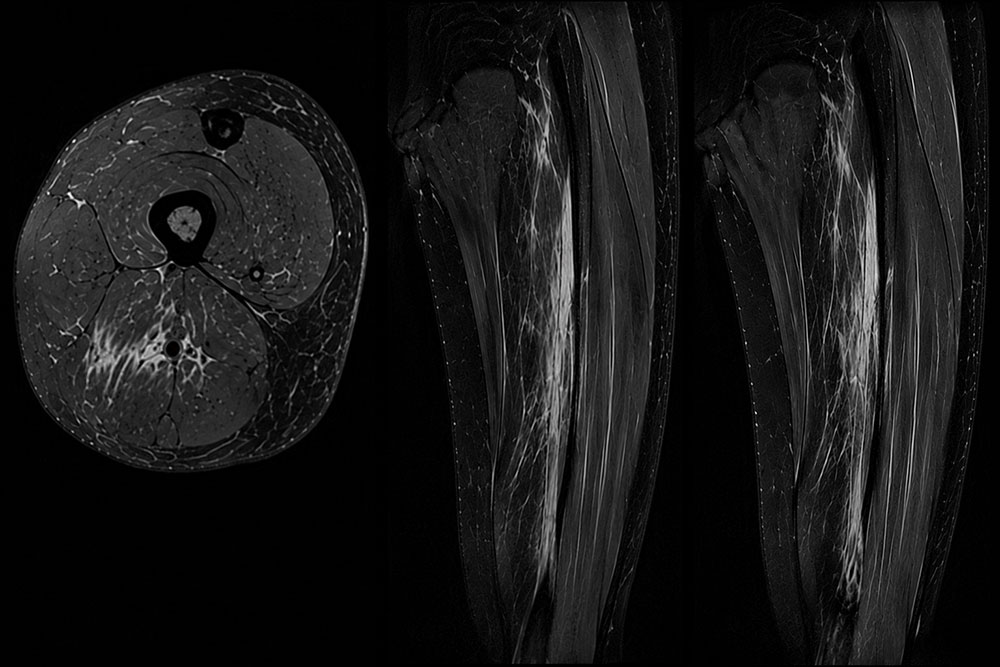
In these situations, imaging is often the logical next step. Ultrasound can identify many muscle tears, while MRI provides the clearest picture of tear grade, location and tendon involvement, which directly shapes treatment decisions.
An AVA Orthopaedics specialist can review your history and symptoms via video consultation, arrange appropriate imaging through providers near you, and interpret the results in the context of your injury. Where a surgical opinion is appropriate, a referral can be arranged, and a Medicare rebate may apply with a valid referral.
How Hamstring Tears and Strains Are Treated
For strains and low-grade tears, treatment is conservative. Early management focuses on relative rest and settling swelling, followed by gradual loading of the muscle under a structured programme. Physiotherapy-guided rehabilitation progressively rebuilds strength, flexibility and running tolerance, with return to sport staged according to how the tissue responds rather than to a calendar.
Higher-grade partial tears follow the same principles but require a more structured rehabilitation pathway and closer monitoring. Loading is progressed more cautiously, bracing may occasionally be used, and milestones are checked carefully before each increase in activity, particularly before any return to sprinting or kicking sports.
When surgery may be considered
A surgical referral is considered in a smaller group of cases, most commonly:
- A complete rupture of the tendon from the sitting bone
- Significant tears with tendon retraction
- Injuries that have failed a properly conducted course of conservative management
Recovery after surgery varies considerably between patients, and specifics are best discussed with the treating surgeon.
Whichever pathway applies, the right treatment depends on an accurate diagnosis first. Managing a Grade 2 tendon injury as though it were a mild strain, or persisting with hamstring rehabilitation when the pain is actually referred from the back, prolongs recovery unnecessarily.
AVA Orthopaedics can assess injury severity through an online video consultation and recommend the appropriate treatment pathway, with same or next-day appointments available Australia-wide.
Get Clarity on Your Hamstring Injury

Ongoing pain after a hamstring injury is common, and in most cases there is a clear explanation once the injury is properly assessed. It should not be ignored or guessed at from home, because the diagnosis determines the treatment.
If your hamstring pain has lasted longer than expected, get your injury assessed online by a sports injury orthopaedic specialist. AVA Orthopaedics offers secure video consultations with orthopaedic specialists, accessible anywhere in Australia, with no referral required to get started.
Specialist Advice. Early Direction.